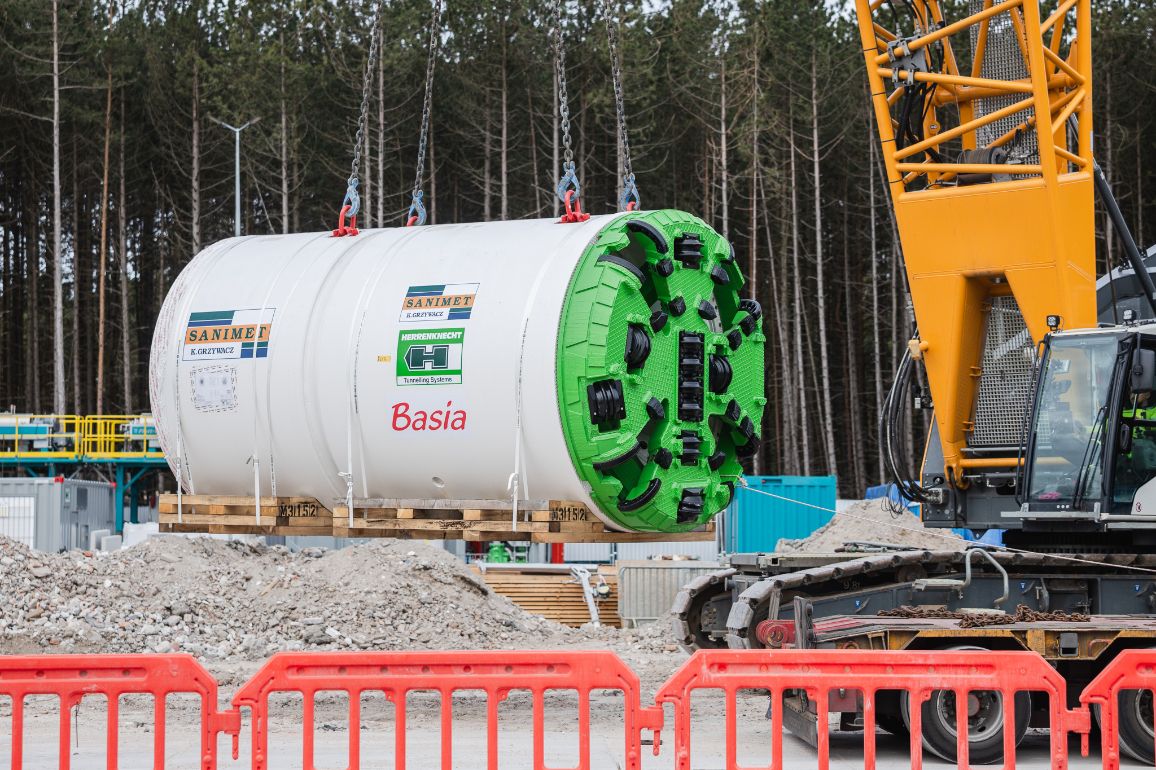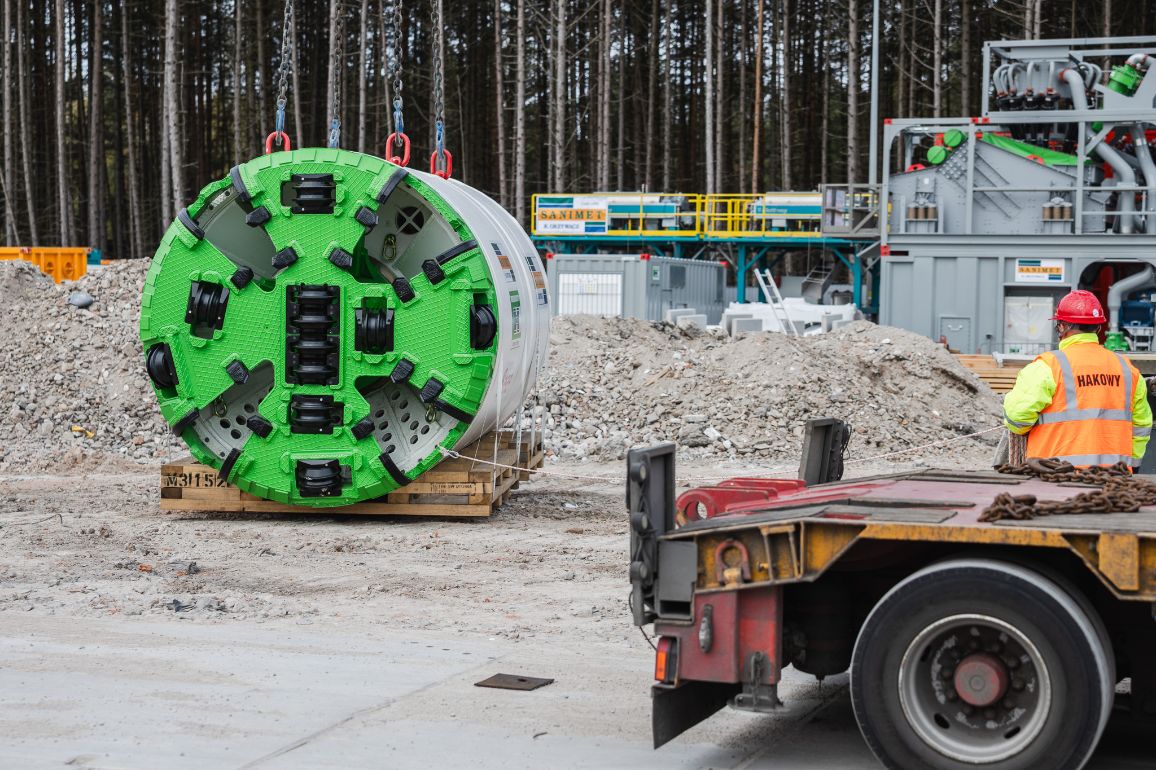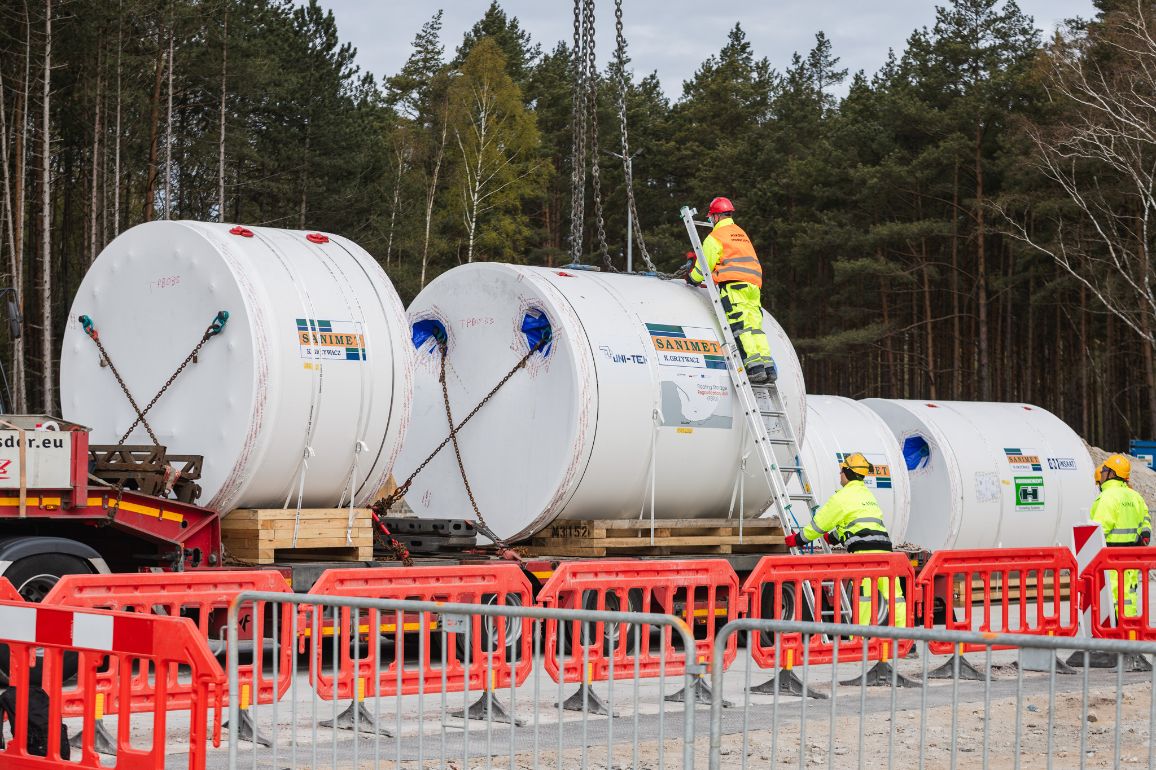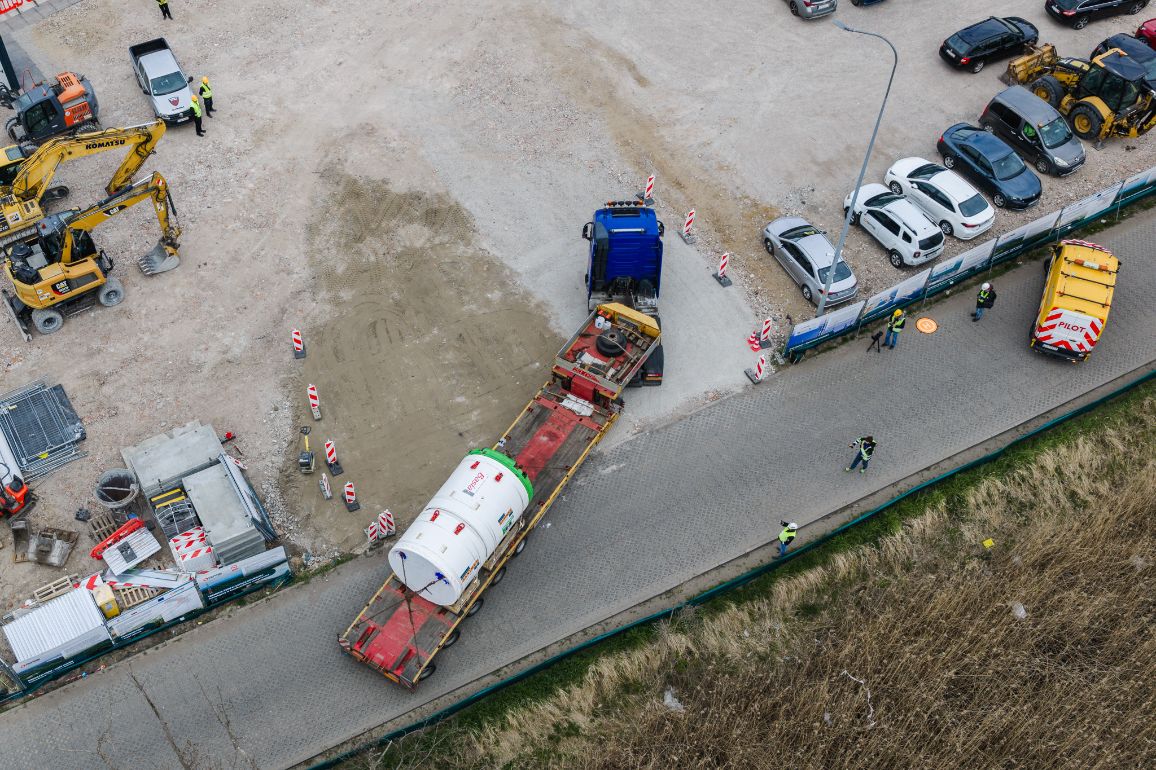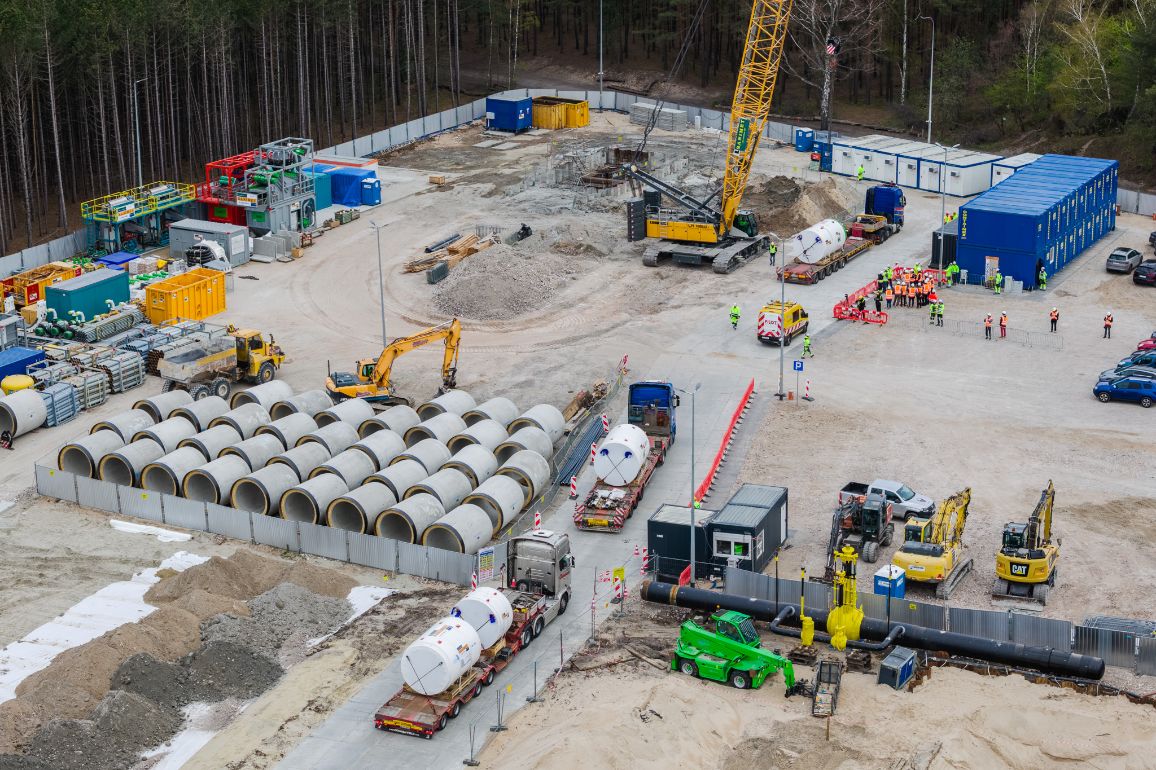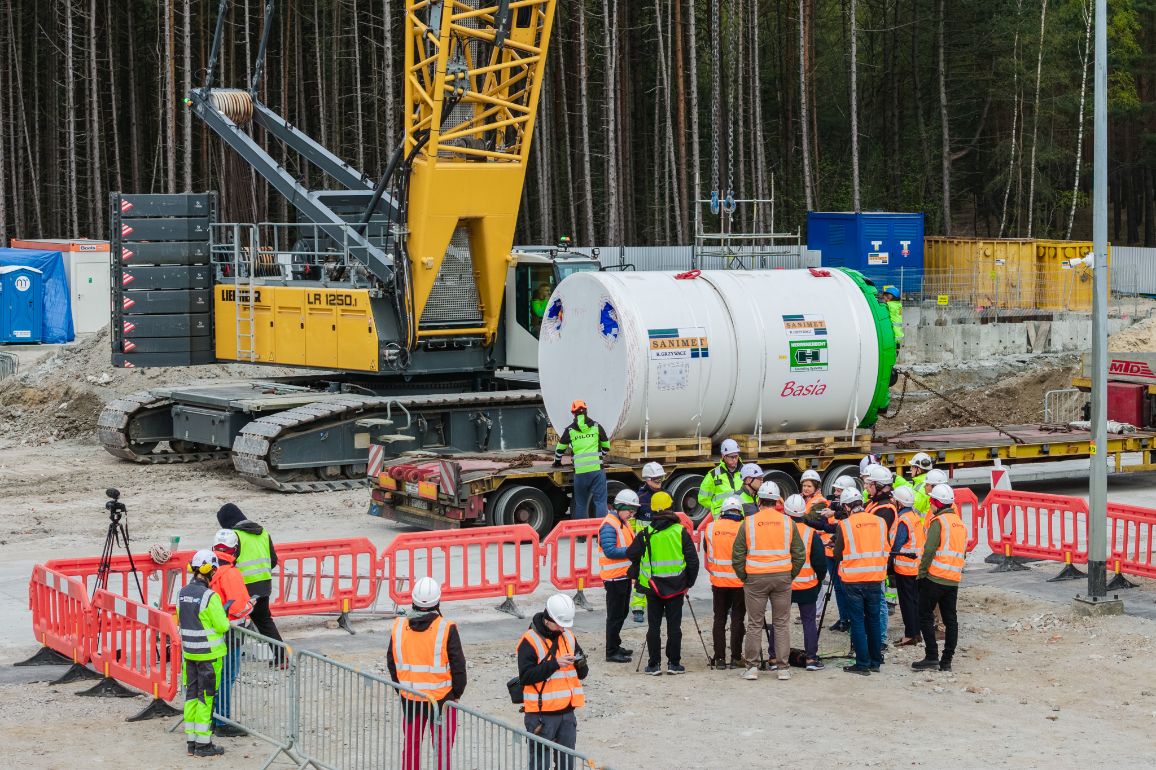


The TBM has reached Górki Zachodnie. It will bore a tunnel for the offshore gas pipeline to connect the FSRU Terminal

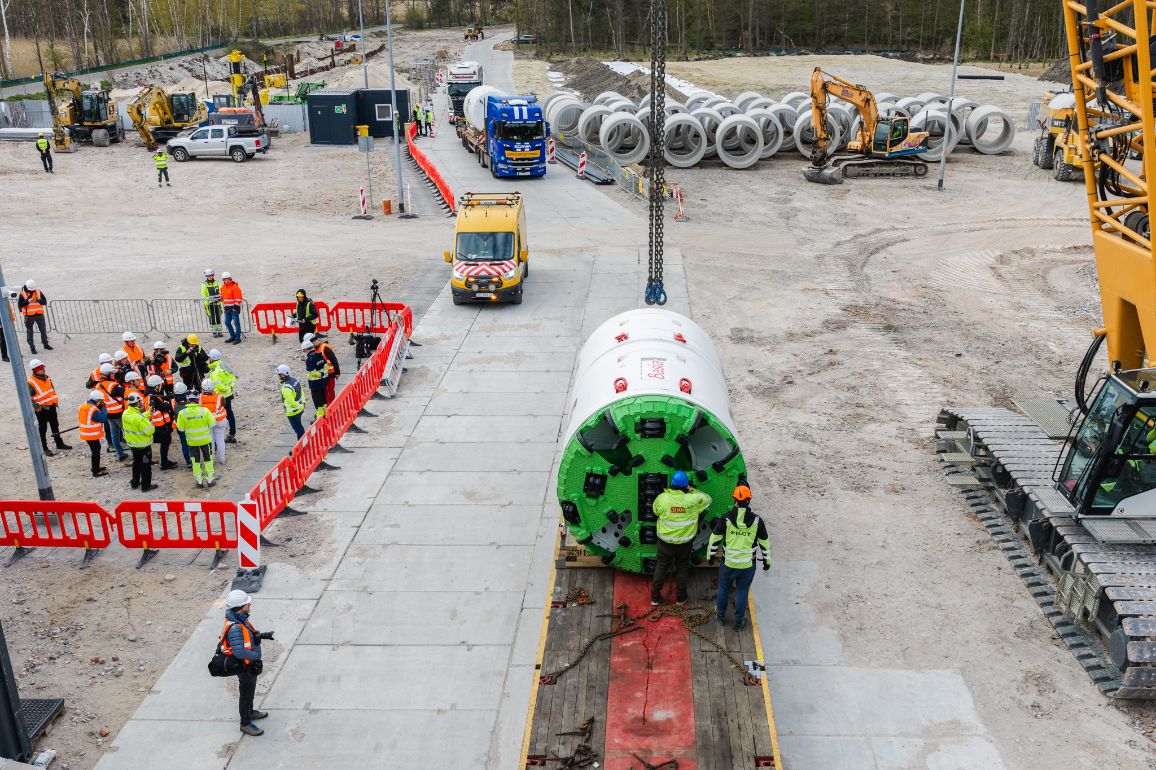
On 30th April, the tunnel boring machine (TBM) reached Górki Zachodnie, where it will be used to prepare an over-kilometre-long microtunnel for the section of offshore gas pipeline to be constructed for the FSRU Terminal. The tunnel will run under the coastal forest, the dunes, the beach and the seabed of the Gulf of Gdańsk. This is yet another important step in the construction of the offshore component of this GAZ-SYSTEM's investment program, which is of strategic importance for Poland’s energy security.
Tunnel underneath the beach and the seabed of the Gulf of Gdańsk
The microtunnel will be 1,100 metres and have an external diameter of approximately 2.5 metres. The technology employing the TBM allows trenchless pipeline construction. This means that the machine will bore the tunnel below the ground and seabed level, without the need for open trenching through the forest, dunes and beach. The carved tunnel will be reinforced with prefabricated reinforced concrete pipes, known as jacking pipes. Integrated sealing systems will form the load-bearing structure of the microtunnel and ensure its stability. A system of steel cables is also scheduled to be installed to aid in pulling the pipeline towards the sea.
Less environmental impact and continued access to the beach
The microtunnel construction is one of the key elements of the FSRU Offshore Project. The decision to adopt the trenchless method was made upon completion of analyses carried out during the project’s preparatory phase. The selection of this technology was of paramount importance to GAZ-SYSTEM, not only from a technical perspective but also in terms of environmental protection and respect for the comfort of local residents and beach users. Its main advantage is that it allows for the pipeline’s passage beneath environmentally valuable areas without disturbing their surface. The microtunnel construction will not restrict access to the beach, which was an important request made by the local community. During construction, there may only be short-term cordoning off of a section of the beach along the microtunnel route as the TBM passes underneath. This is necessary for safety reasons, and the barriers will be removed once the machine has crossed the beach.
Preparations for tunnel boring- Routing the pipeline through the microtunnel will provide additional physical protection for this critical infrastructure element and enhance the reliability of other components, such as fibre-optic cables. The solution will also facilitate the gas pipeline installation process itself, as the microtunnel will be equipped with components to support the installation of the pipeline made of previously prepared, prefabricated sections (spools). Once the microtunnelling work is complete, the starting shaft will be suitably prepared for the next stage, which will include its extension and adaptation of the equipment configuration for pulling the pipeline – said Maciej Wawrzkowicz, FSRU Offshore Project Manager, GAZ‑SYSTEM.
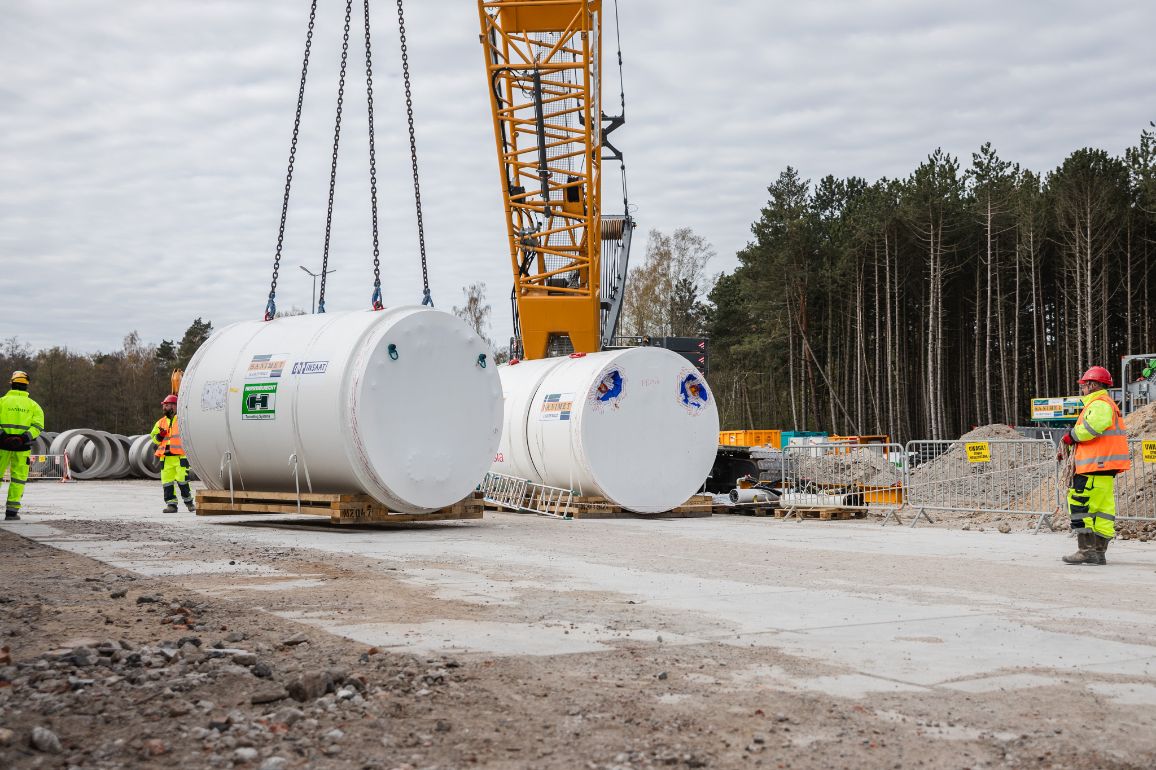
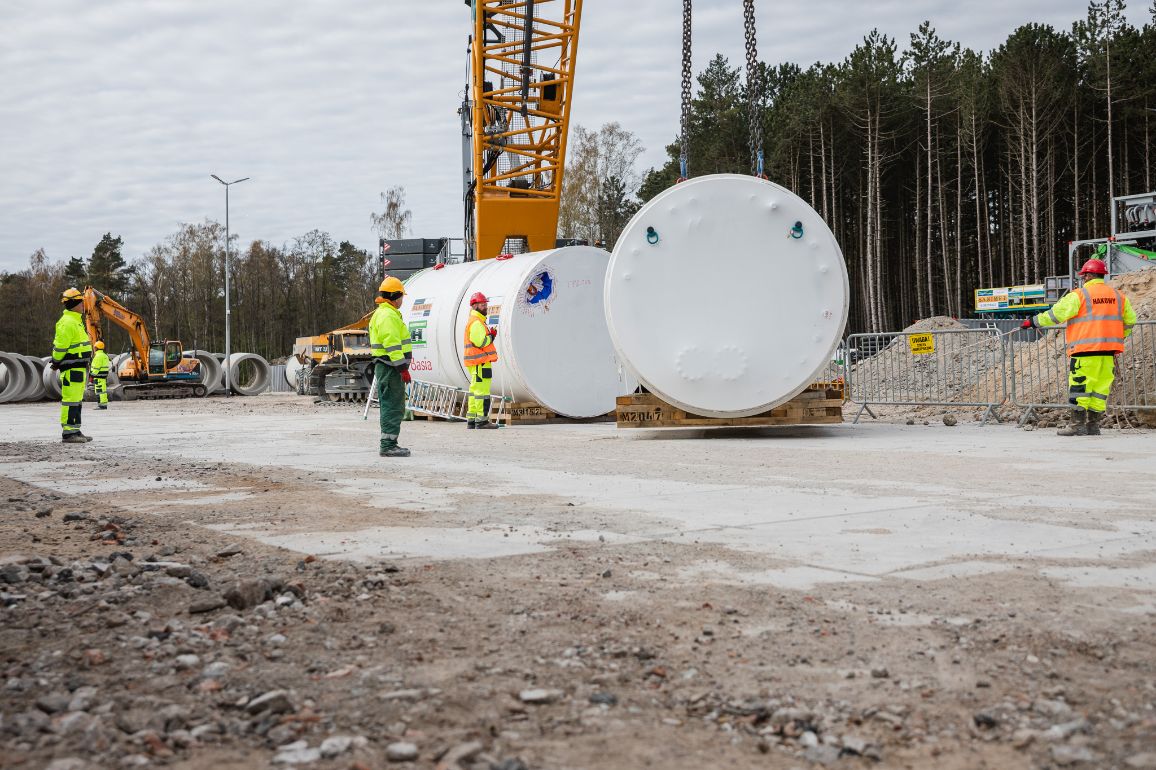
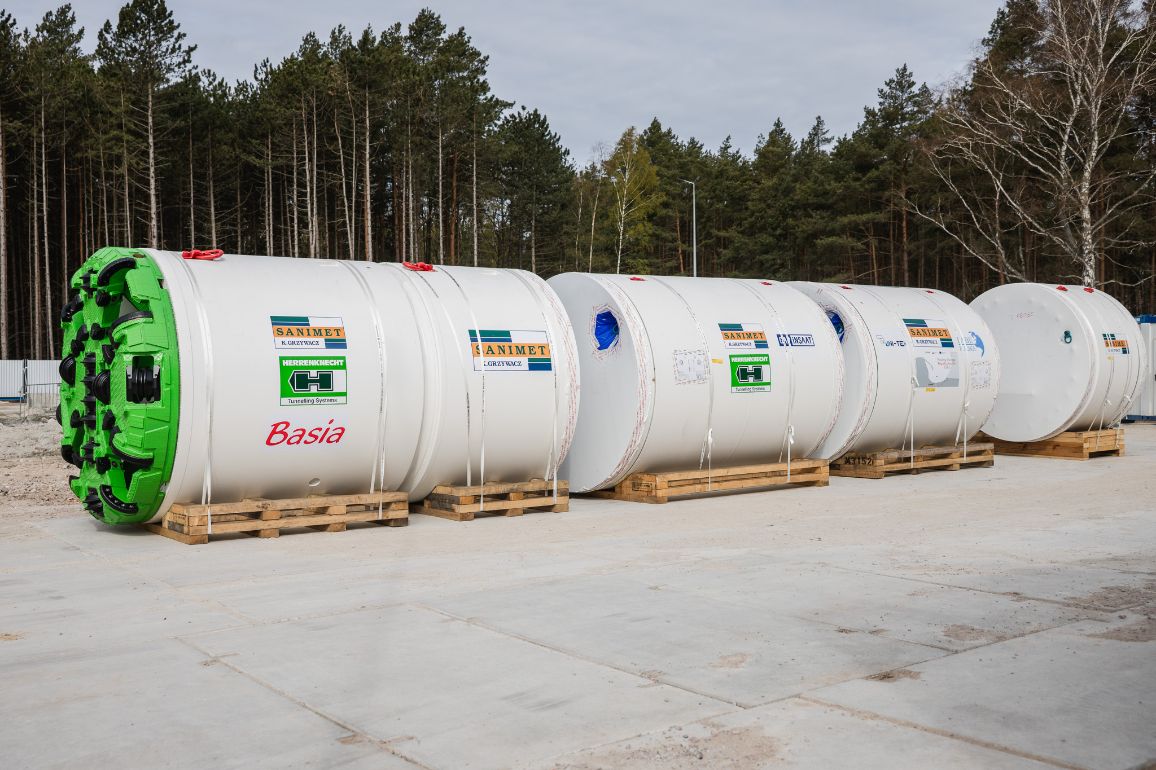
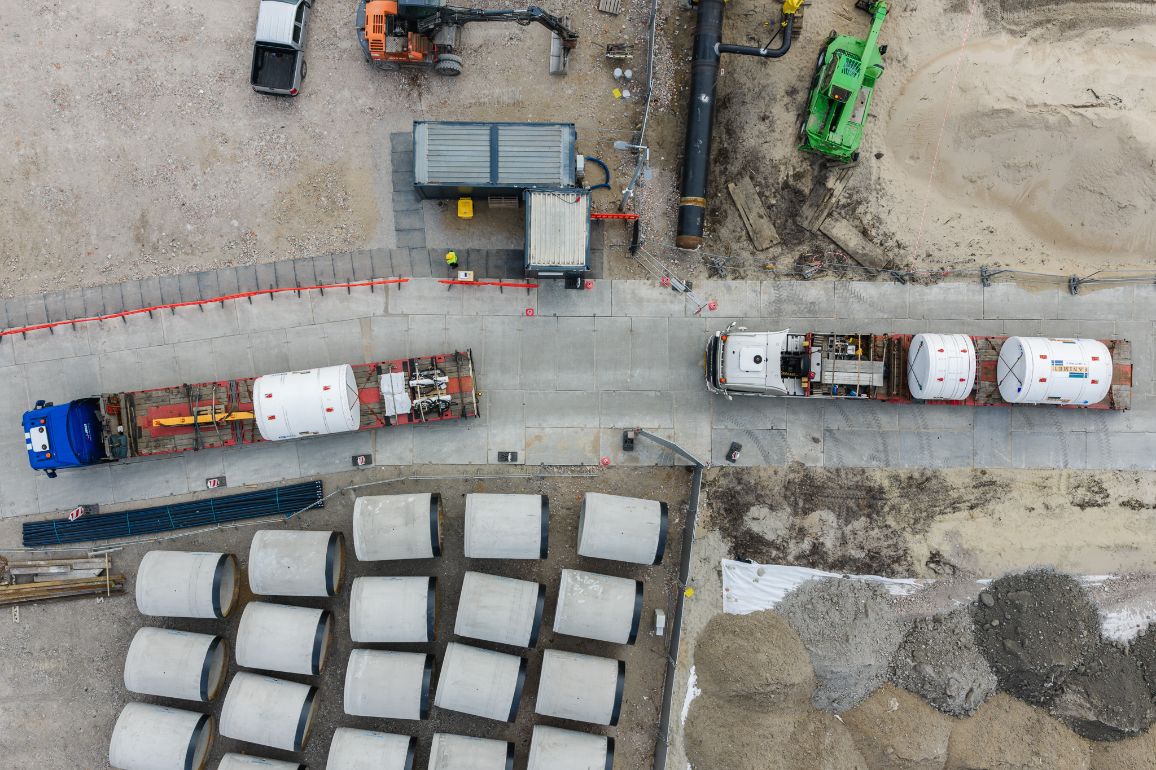
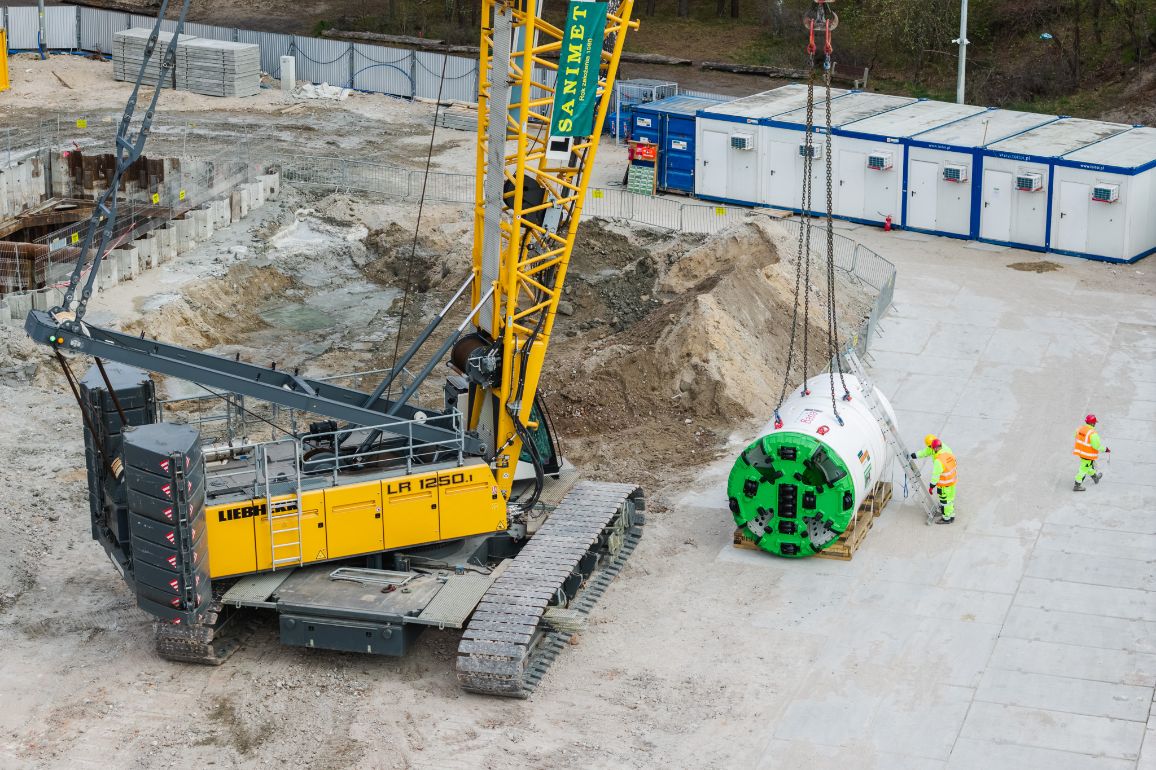
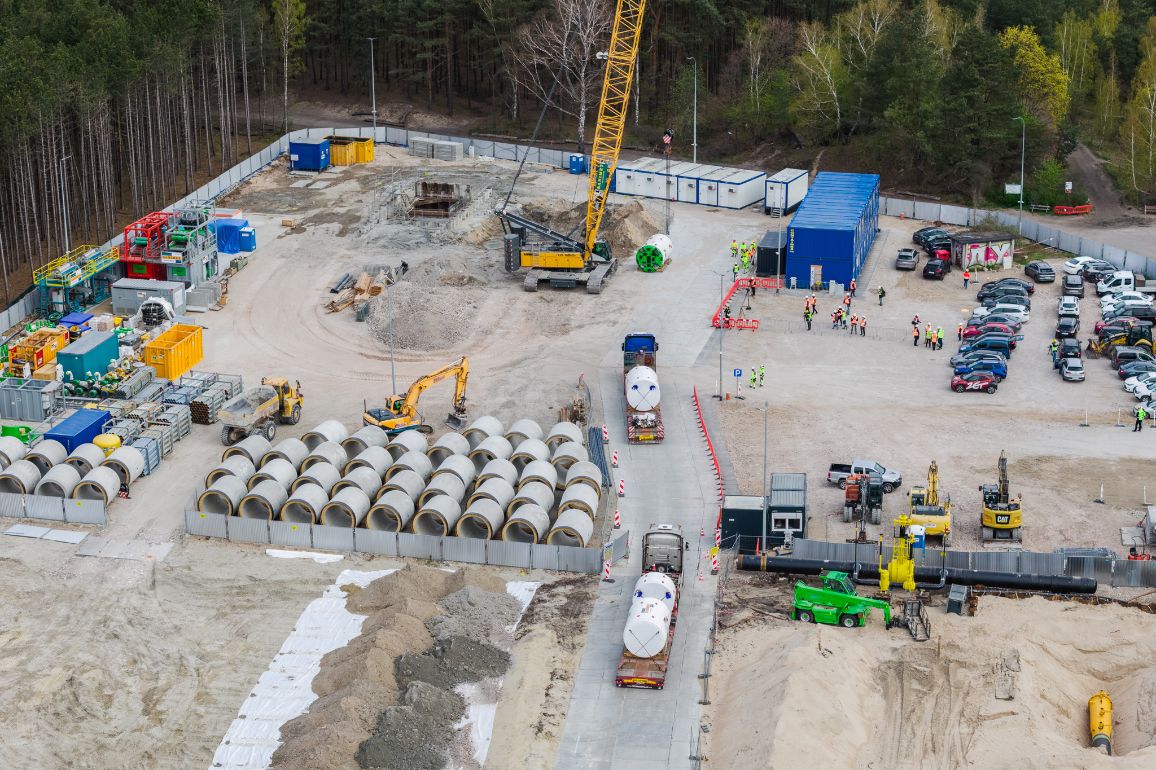
The delivery of the TBM marks the move to the next stage. The machine will be placed in the starting shaft already prepared at the construction site in Górki Zachodnie. First, the TBM will be installed, followed by further segments to be added as drilling progresses. The TBM components will have various functions, including control of the cutter shield, supply of power and other utilities, the slurry, and transport of spoil to the surface. The machine will be operated by experienced Polish specialists trained in handling this type of equipment.
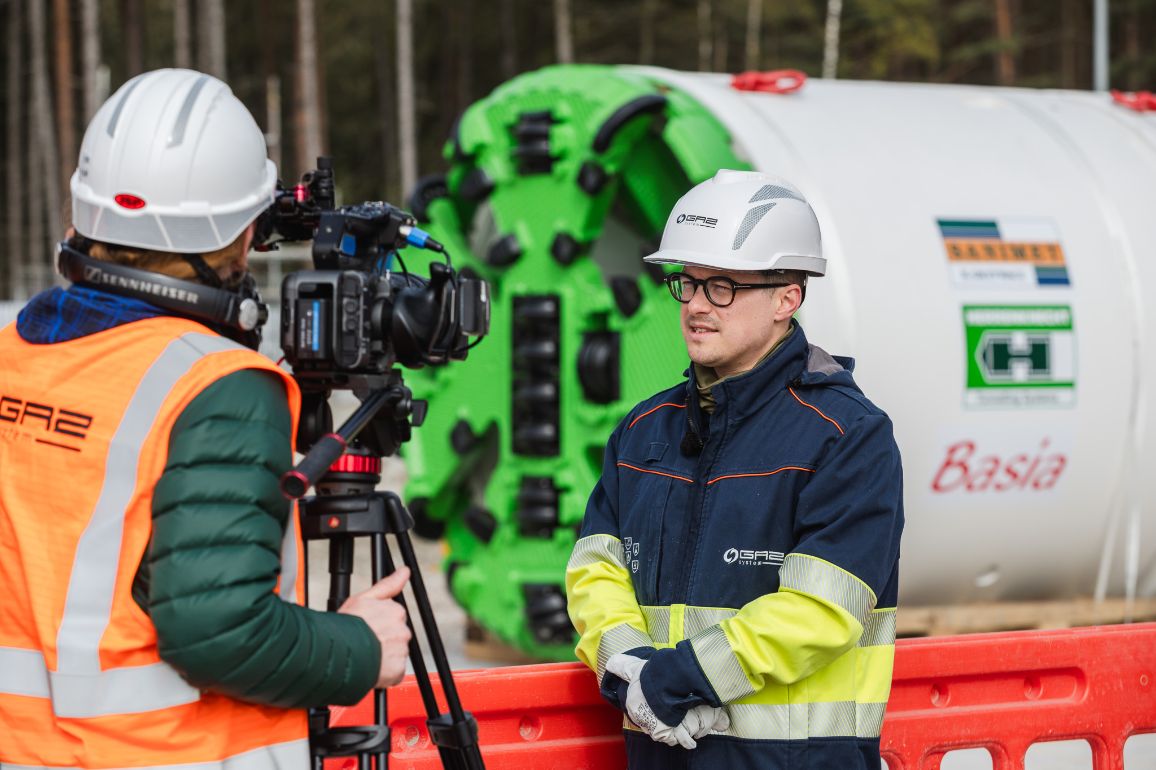
Tunnel boring machine (TBM)- We are currently embarking on one of the most technologically advanced microtunneling stage. The site is ready for the machine’s installation and we are finalising work on the starting shaft as well as reinforcing and stabilising the ground using the jet grouting method. Once all the machine segments are delivered, we will start assembling them in the shaft, connecting the power supply, control and monitoring systems, and run SATs under the supervision of the manufacturer’s experts. The coming weeks will require very precise technical coordination, testing of all the machine’s systems, and approval of emergency and safety procedures for the crew – said Łukasz Radomski, Deputy Contract Director, GAP Insaat – FABE Polska – UNITEK Insaat Consortium.
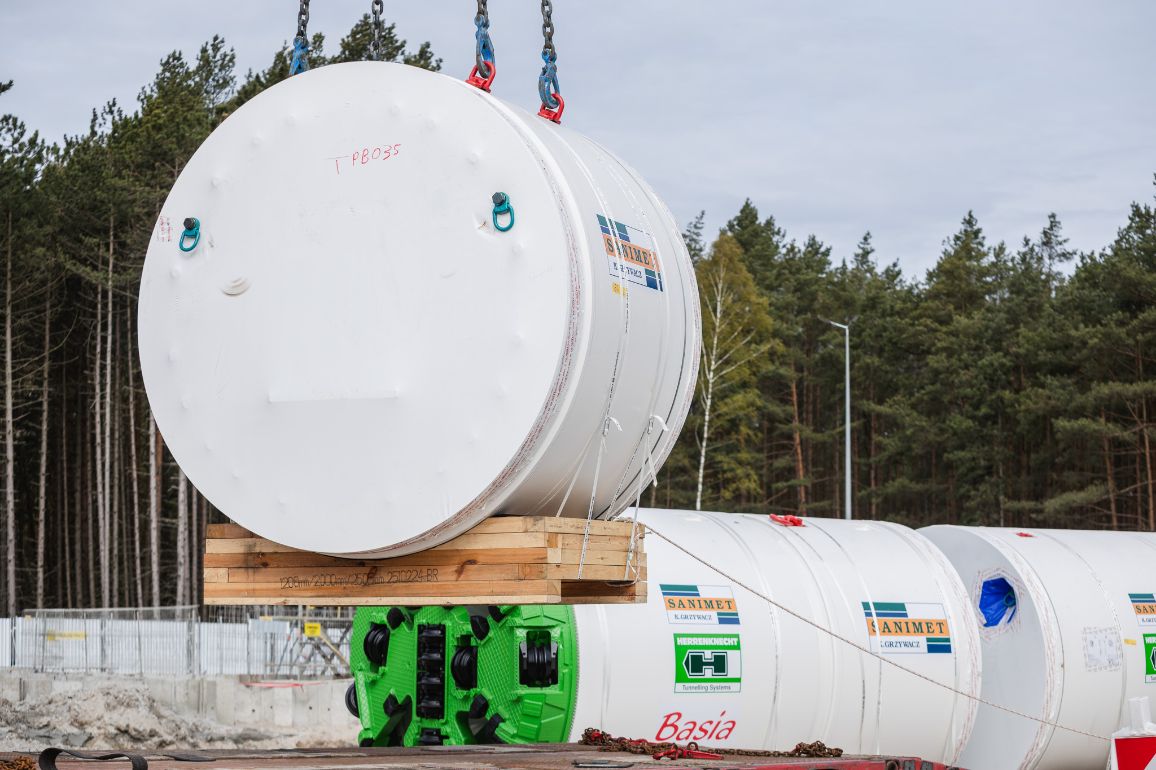
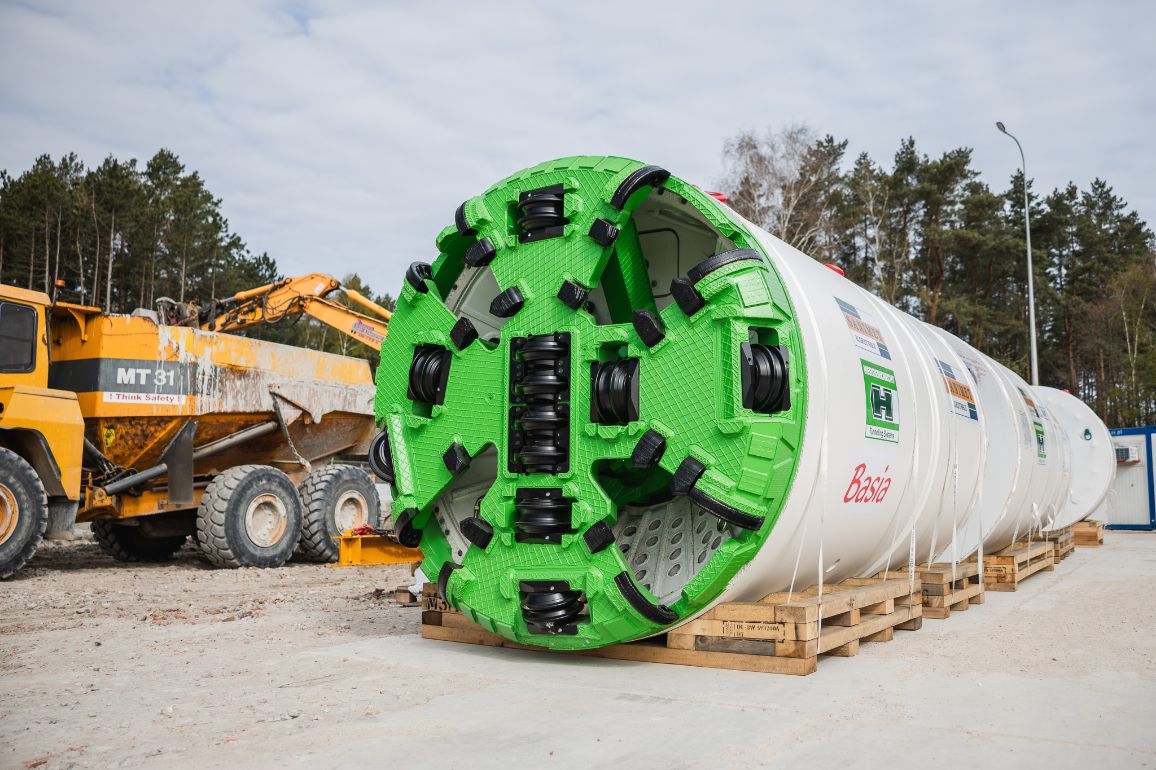
A Herrenknecht AVND 2000 AB slurry microtunneling machine will be used for the construction. It is 12.5 metres long and consists of four segments. Its heaviest component, fitted with a cutter head, weighs 42 tonnes. The machine has been adapted to work in difficult ground conditions and to prepare tunnels with this trenchless method over long distances. Once tunnelling is complete, the TBM will be retrieved from the exit pit at bottom of the Gulf of Gdańsk by a davit mounted on a specialised barge.
Upcoming works schedule- The Herrenknecht AVND 2000 AB was manufactured specifically for the construction of the tunnel constituting a part the FSRU project in Gdańsk. During the preparatory stage, it was additionally fitted with a sea recovery module allowing its safe retrieval. The tunnel boring equipment also allows operators to enter into the machine for maintenance and tool replacement without the need for dismantling the TBM. This significantly improves work safety and increases the operational efficiency of the project implementation – said Barbara Grzywacz, Director of SANIMET Sp. z o.o., TBM’s owner and Contractor for microtunnelling.
Preparations for the start of microtunnelling will continue until mid-May.
The tunnel itself should be ready by the end of October 2026, assuming the machine’s current performance parameters and geological conditions estimated on the basis of completed surveys prove to be true. Once microtunnelling is complete, the starting shaft will be retrofitted and reconfigured to allow progression to the next stage, namely the pulling of the offshore gas pipeline section.
The main pile-driving and construction works to build the jetty constituting part of the FSRU Terminal in the Gulf of Gdańsk are scheduled to commence in June. Preparatory works and mobilisation have already begun.
About the FSRU Terminal
The FSRU Terminal in the Gulf of Gdańsk is one of GAZ-SYSTEM’s strategic investment projects aimed at strengthening Poland’s energy security and diversifying the directions of natural gas supply. The project involves the construction of the FSRU vessel as well as offshore and onshore infrastructure, to enable the unloading, process storage and regasification of liquefied natural gas delivered by sea, which will then be transported to the national transmission system to finally reach customers in Poland and the region. The program represents an important element in the expansion of the national gas transmission infrastructure and in enhancing the resilience of the Polish gas market.