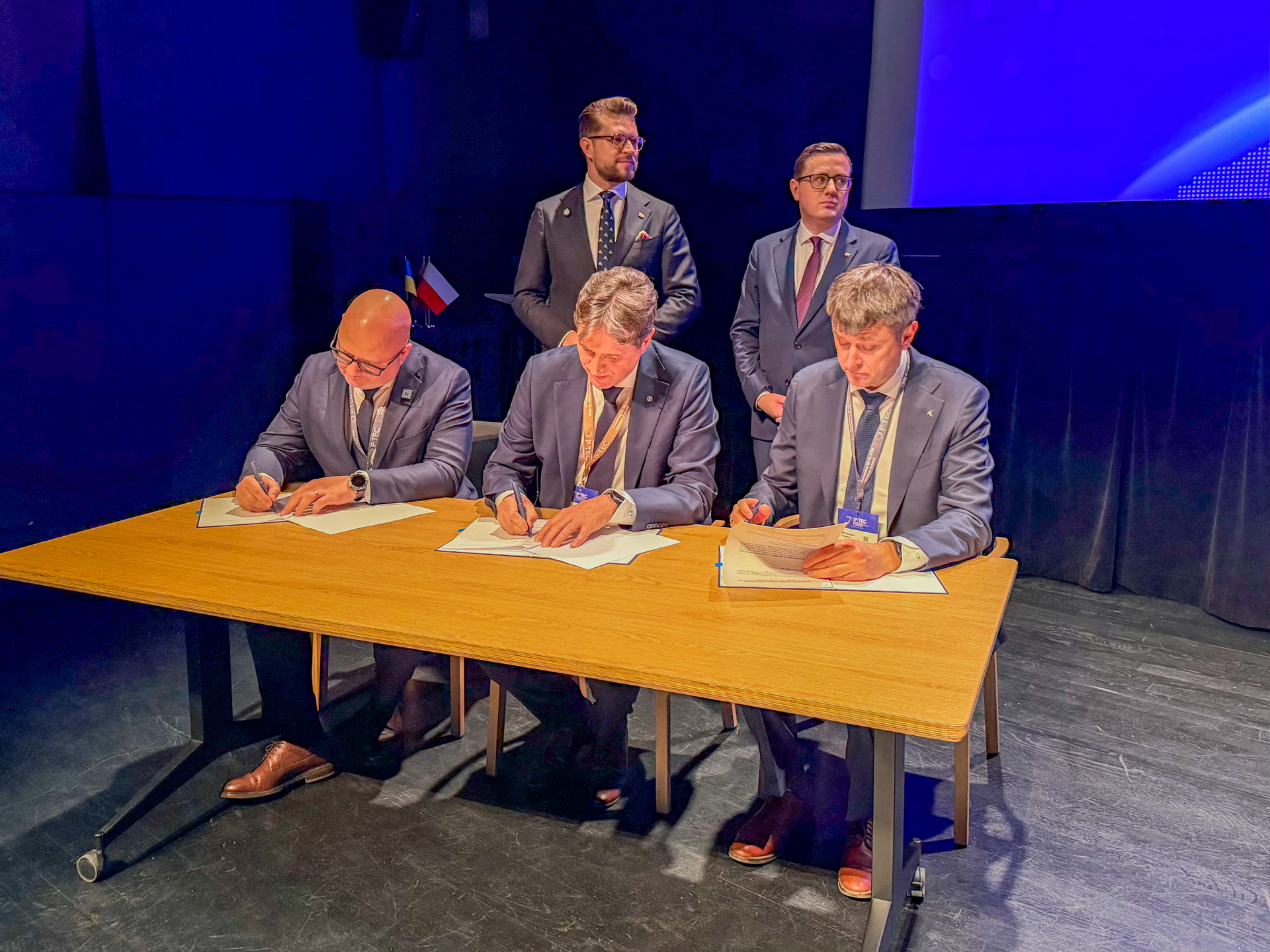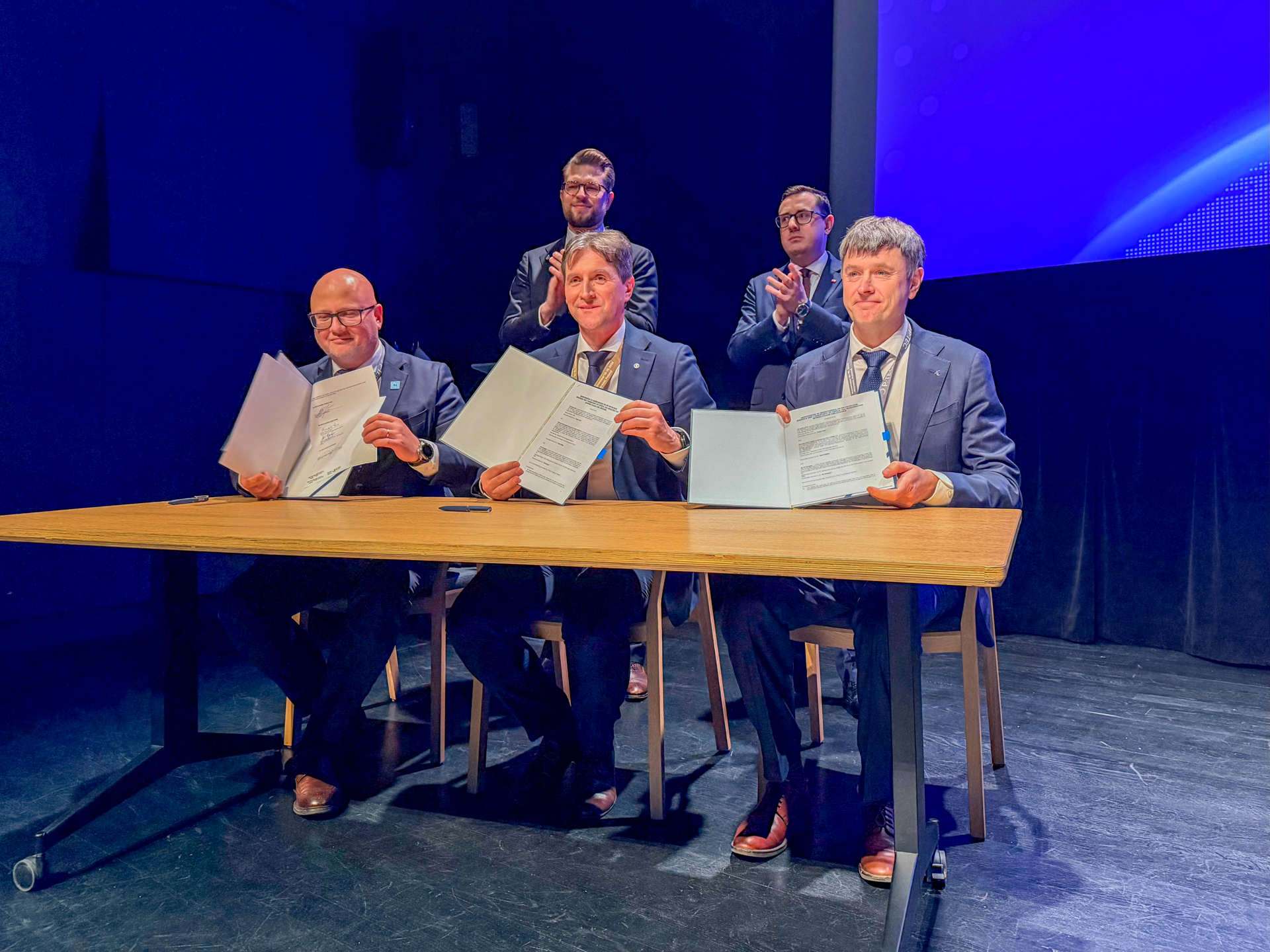
Gas and LNG infrastructure operators of Poland and Lithuania sign memorandum of understanding to strengthen resilience and security of critical energy infrastructure in the Baltic Sea region at P- TEC 2026
Warsaw, P-TEC 2026 – Gas and LNG infrastructure operators (TSOs) from Poland (GAZ-SYSTEM), and Lithuania (Amber Grid and KN Energies) have signed a Memorandum of Understanding on The Protection, Resilience And Cybersecurity Of Critical Gas Infrastructure Between Poland And Lithuania.
- With the rapid changes reshaping the European gas market, regional cooperation has become essential to maintaining energy security. The Memorandum we signed today reaffirms our shared commitment to strengthening security of gas supply, safeguarding critical infrastructure, and advancing collaboration in cybersecurity. The LNG terminals in Poland and Lithuania serve as critical supply hubs for both the Baltic Sea region and Central and Eastern Europe, significantly enhancing the energy security of our countries and bolstering regional resilience against future challenges, said Sławomir Hinc, CEO of GAZ-SYSTEM.
The LNG terminals in Świnoujście (Poland) and Klaipėda (Lithuania) as well as transmission network in the Balic Sea Region have fundamentally changed the security architecture of the regional gas market. They transformed Central and Baltic Europe from being dependent on a limited number of pipeline supply routes into a region with growing direct access to the global LNG market. Today, these terminals are not only national assets but also critical regional infrastructure supporting security of supply across the Baltic States, Poland, and Central Eastern Europe.- Our region’s energy infrastructure functions as an interconnected system, so its security depends on the resilience of every link in the chain. This regional agreement will enable us to strengthen that chain in a structured and coordinated way. Experts from the participating companies will form joint working groups, exchange information on threats and incidents, assess emerging risks together, share expertise in infrastructure protection and emergency response, and conduct joint training and exercises – said Nemunas Biknius, CEO of Amber Grid, adding that the experience of recent years has demonstrated that energy security extends far beyond the availability of energy resources.
The cooperation aims to establish a structured framework between partners to enhance the security, reliability and operational resilience of critical energy infrastructure in the Baltic Sea region, such as LNG terminals and gas transmission system.
The cooperation is particularly important because critical gas infrastructure in the Baltic Sea region is highly interconnected, meaning that disruptions in one country may have cross-border consequences. Strengthening cooperation among infrastructure operators will improve regional resilience, enhance preparedness against cyber, physical and hybrid threats, support the continuity of energy supplies and contribute to the long-term energy security of the Baltic Sea and Central and Eastern European regions.
Memorandum of Understanding will establish structures for closer cooperation in two main areas: Critical Infrastructure Protection and Cybersecurity. As operators of key gas transmission, LNG and storage infrastructure, partners recognized that growing physical, cyber and hybrid threats require closer coordination, information sharing and joint preparedness efforts. The cooperation is intended to improve the parties’ ability to prevent, detect, respond to and recover from incidents affecting critical infrastructure, while supporting compliance with national and EU regulatory requirements.